
A Comparison between American standard bathtubs and Chinese bathtubs: The Collision of culture, Function and lifestyle.
In today's increasingly globalized world, the design of household items not only reflects the progress of technology and craftsmanship, but also, at a deeper level, reveals the lifestyles, cultural concepts and aesthetic orientations of different countries and ethnic groups. Take bathtubs as an example. There are significant differences between the standard bathtubs in the United States and the common bath appliances in Chinese households. These differences are not only reflected in size, material and function, but also imply the different understandings of the daily act of "bathing" between the East and the West. This article will compare American standard bathtubs with Chinese bathtubs (or bathing methods) from multiple dimensions, and explore the cultural logic and practical value behind them.
Size and spatial layout: A contrast between boldness and refinement。
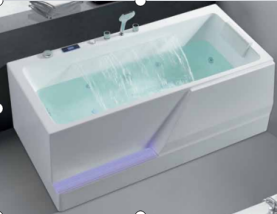
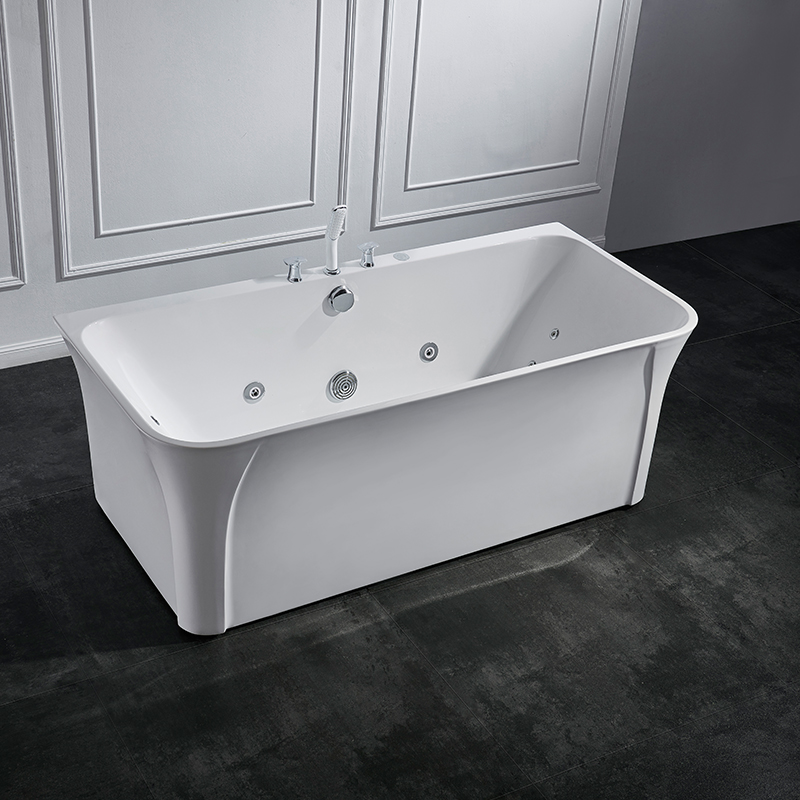
一,American standard bathtubs are usually large in size, with a common length of 60 inches (about 152 centimeters) and a depth of over 14 inches (about 35 centimeters). Some luxury models can even reach 72 inches (about 183 centimeters) or more, easily accommodating one person for full-body soaking. This "big and deep" design reflects the American home's pursuit of comfort and private enjoyment. Many American-style houses are equipped with independent master bathrooms, and the bathtub is often separated from the shower area, forming a "dual-function" bathing space.
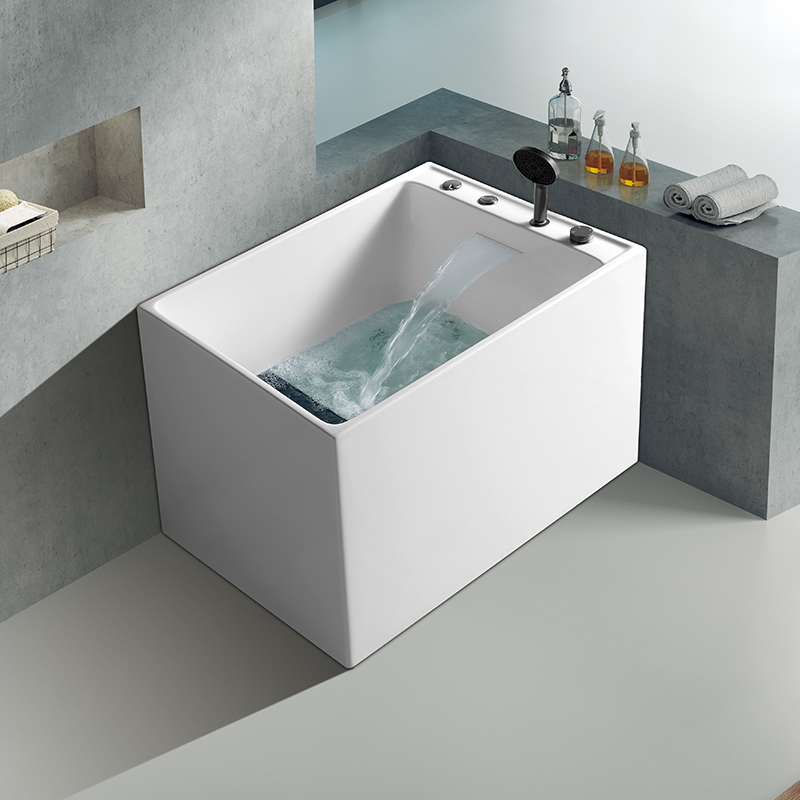
In contrast, the usage rate of bathtubs in Chinese households is relatively low, especially in medium and small-sized cities and old-style residences, where the combination of shower enclosures or shower curtains with floor drains is more common. Even if a bathtub is installed, it is better to choose a medium or small-sized one (1.2 meters to 1.5 meters) to adapt to the compact bathroom space. This reflects the reality that the area of urban residences in China is generally limited and space utilization is emphasized.
Usage habits and cultural background: Bath vs. shower。
二、Americans generally enjoy "bath" (soaking bath), believing that soaking in warm water helps relieve stress and relax muscles, which is an important form of family leisure. Especially in winter or after high-intensity work, taking a bath is regarded as a kind of "self-healing" ritual. Therefore, the design of bathtubs in the United States emphasizes large water capacity and good heat preservation. Some high-end models are also equipped with hydraulic massage, bubble systems, etc.
In China, traditionally, the "flushing and bathing" culture is more highly regarded. Influenced by climate, water resource distribution and living habits, most Chinese people tend to take quick showers and emphasize "efficient cleaning". Although taking a bath has gradually been accepted in recent years with the improvement of living standards, especially in southern regions or high-end residences, on the whole, bathtubs are still not essential items. Public bathhouse culture is still prevalent in some areas of the north, emphasizing "collective bathing + back rubbing + social interaction", which contrasts sharply with the private and individualized bathing experience emphasized in the United States。
Materials and craftsmanship: Industrialization versus Localization choice
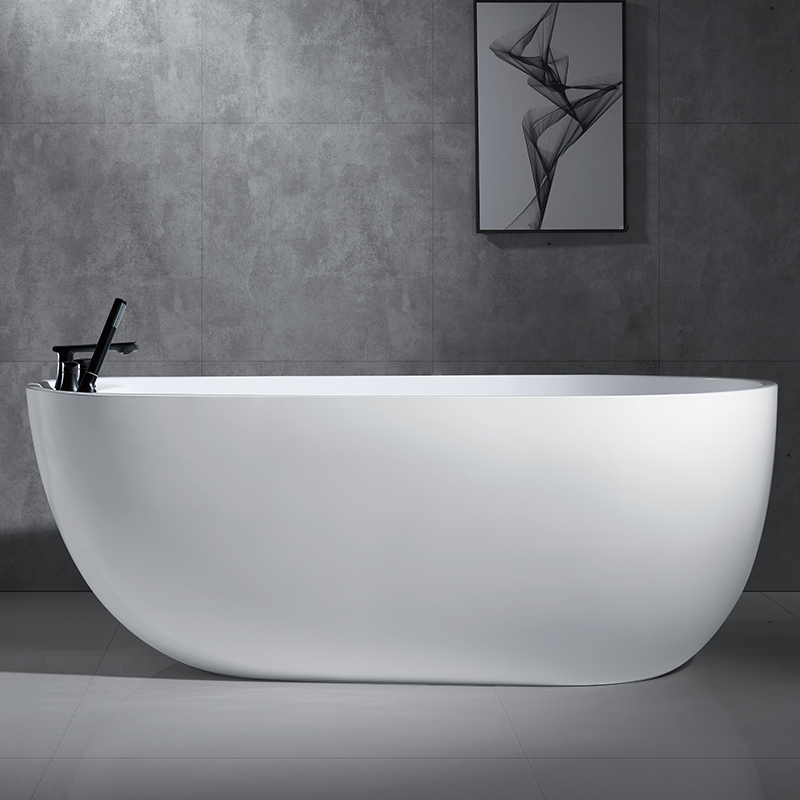
三、American standard bathtubs are mostly made of Acrylic (Acrylic) or cast iron enamel. Acrylic bathtubs are lightweight, have good heat preservation, and come in various shapes, making them suitable for large-scale industrial production. Cast iron enamel is thick, durable and has a high-end texture, and is often seen in classic American decoration styles. It is usually equipped with skirt plates during installation, which is convenient for embedded installation and looks neat and tidy.
The material selection for bathtubs in the Chinese market is becoming more diverse. Besides acrylic, artificial stone, ceramics, steel plate enamel, etc. are also quite common. Some high-end residences feature custom stone bathtubs, reflecting the Oriental aesthetic preference for "natural materials". Meanwhile, due to the differences in drainage systems and water pressure conditions, Chinese bathtubs are designed with greater emphasis on leak-proof, anti-slip and rapid drainage functions.
Intelligentization and environmental protection trends: The Future Direction of Convergence despite different paths
四、Although they started from different points, China and the United States are gradually converging in the development of bathtub technology. In recent years, the United States has been promoting water-saving bathtubs and intelligent control systems, such as automatic constant temperature, water quality monitoring, and remote control via APP. Driven by the smart home wave, China has witnessed the emergence of a large number of smart bathtub brands, integrating functions such as massage, aromatherapy, lighting, and music, to meet the demands of the younger generation for an "immersive bathing experience".
Meanwhile, the enhancement of environmental awareness has also made both sides pay more attention to the efficiency of water resource utilization. Some states in the United States have already enacted laws to limit the capacity of bathtubs and encourage the use of high-efficiency shower heads. China is also promoting green building standards and advocating water-saving bathroom products。
Conclusion: Integration and Respect amid Differences
五、The differences between the standard bathtub in the United States and the bathing methods in China
are essentially the result of different geographical environments, cultural traditions and lifestyles. The former emphasizes individual relaxation and spatial enjoyment, while the latter focuses on practicality, efficiency and family collaboration. However, as global cultural exchanges deepen, the two are learning from each other: more and more Chinese families are beginning to install large-sized bathtubs to enjoy the comfort of an "American-style bath". American designers have also begun to pay attention to the application of Oriental minimalist aesthetics and natural materials。
In the future, the bathroom space will no longer be merely a functional place but a "mini sanctuary" for physical and mental relaxation. Whether it is the standard bathtub in the United States or the shower culture in China, they ultimately serve the common pursuit of health, comfort and beauty by humanity. Understanding each other amid differences and innovating and upgrading through integration - this is the true direction of home civilization in the era of globalization.
