
Step into the Bathtub Factory: Touch the "comfortable" temperature between metal and glaze.
When I pushed open the heavy iron door printed with the words "Production Hub, pay attention to safety", I originally thought I would bump into a cold and hard industrial scene - the roar of mechanical arms, the shrill clashing of metals, and the pungent smell of industrial coatings pervading the air. But when you actually step into the workshop of the bathtub factory, it feels like you have mistakenly entered a precise ritual about "temperature" : there is no imagined noise, only the regular murmur of the assembly line, and the metal and glaze interweave to create a warm luster under the light, as if every process is carefully polished for the word "comfort". Here lies a secret realm where industry and art blend, a life field where cold metal transforms into warm containers.
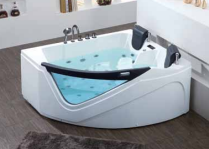
The first thing that catches the eye are rows of neatly arranged metal plates, cut into the shape of bathtubs, lying quietly on the conveyor belt like unmarried girls. The workers, dressed in blue work clothes and thick gloves, move surprisingly gently. They calibrate the angles of the plates with precision instruments, tighten the connections with electric screwdrivers, and when their fingertips glide over the metal edges, they deliberately use sandpaper to gently sand them, fearing to leave even a single burrs. An experienced master saw me stop to observe and shared his experience with a smile: "The bathtub is something used close to the body. Even a 0.1-millimeter error can make the person taking a bath feel uncomfortable." We've been in this line of work for over twenty years. Our eyes are as accurate as instruments. With just a touch of our fingers, we can tell where needs further repair." His calloused palm stroked the side wall of the bathtub, and his fingertips moved on the metal surface as if touching a child's cheek. Sunlight slanted down from the skylight on the top of the workshop, casting tiny speckles on the metal surface, as if telling a story of a transformation about "gentleness". He suddenly stopped and pointed to the old photos on the distant wall, saying, "In the past, this job was all done by hand hammering. Each hammer was hammered to create an arc, and the masters' hands were all covered with blisters and calluses." Now there are machines, but the key parts still have to be done by hand. This skill has been passed down for three generations and cannot be lost." His voice carried the sediment of time, and the metal plates in his hands seemed to have taken a breath.
Walking along the assembly line, a faint smell of glaze gradually wafted into the air. It was not pungent but rather carried a touch of warm and mellow texture. Here is the "beauty workshop" of the bathtub: The automatic glazing machine moves slowly, and the uniform glaze falls on the metal base like fine rain, instantly wrapping the cold and hard metal in a warm "coat". I took a closer look. The glaze, under the light, gave off a soft luster, much like the dewdrops condensed on the lotus leaves in the early morning, or the hazy scene of the first snow covering the celadon. The worker in charge of glazing was a young man. Pointing at several large vats in the glazing area, he said, "This glaze is very particular. It needs to be mixed with feldspar, quartz and clay in proportion, then ground into fine powder and mixed into slurry." If it's too thick, it will pile up materials and burn out like lumps. It's too thin to cover the metallic base color. It needs to be adjusted to a "milk smooth" state just right." As he spoke, he stirred the glaze slurry with a spoon. When the glaze flowed over the spoon, it was indeed as continuous as silk. He told me that in order to achieve the desired color, he and his masters had stayed in the glazing area for three consecutive days, trying over twenty formulas, and the failed materials were piled up like a small mountain. One morning, when the first ray of sunlight shone on the freshly baked bathtub, giving the glaze a pearl-like luster, they smiled at each other. That color later became the factory's signature "Moonlight White". What amazes me the most is the drying process of the glaze: the bathtub is sent into the high-temperature kiln, and the flames dance inside the kiln without leaving the slightest scorch mark; instead, it makes the glaze surface even smoother. Through the observation window of the kiln, I seem to witness a wonderful chemical reaction - metal and glaze embrace each other in the high temperature, and the flame is their matchmaker, allowing two completely different materials to forge an eternal contract in the scorching heat. The temperature control technician beside the kiln was always keeping a close eye on the instrument. He told me that the temperature must be precisely controlled at 1280℃±5℃. If it was one degree higher, the glaze would crack; if it was one degree lower, it wouldn't melt completely. "This temperature is the result of countless experiments. It's just like covering a bathtub with a perfectly fitting quilt, neither too much nor too little, just right."
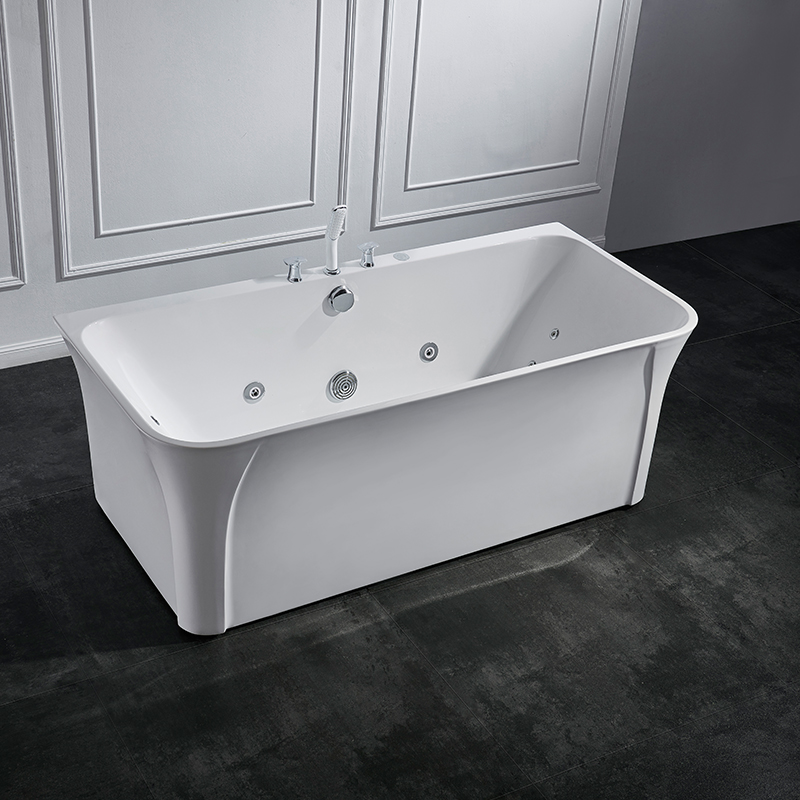
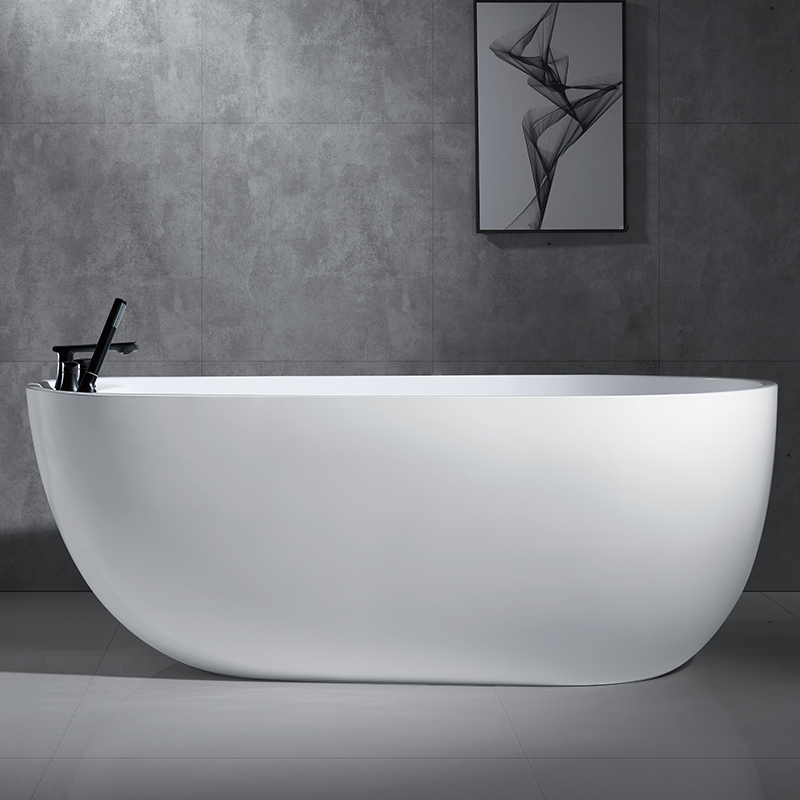
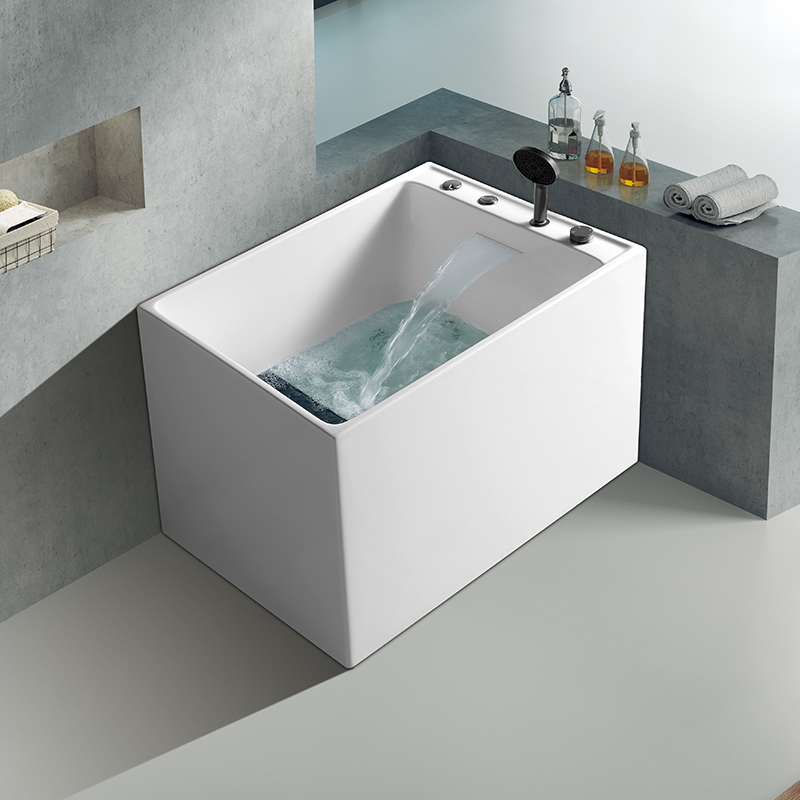
When I reached the finished product area, the scene before my eyes was even more captivating: rows of bathtubs were neatly arranged, ranging from simple squares to elegant arcs, from pure white solid colors to refined ones with subtle patterns. Each one was like a work of art. Sunlight streamed through the glass Windows at the top of the workshop, falling on the glazed surface and refracting warm light spots. Workers are conducting the final quality inspection on the finished products - some are wiping the glaze surface with a soft cloth to check for any minor flaws. Someone poured clear water into the bathtub and observed whether the water flow was smooth and the drainage was unobstructed. A quality inspector pointed to the curvature at the bottom of the bathtub and said, "Here, it needs to conform to the curve of the human lumbar vertebrae so that the body can fully relax when taking a bath." We have conducted thousands of ergonomic tests before, and even entered the data of customers of different heights and body types into the system, all to ensure that every user can find the most comfortable posture. As he spoke, he gently tapped the side wall of the bathtub. The glaze gave off a clear echo, like the clashing of jade stones, with a lingering sound. A female worker beside me was measuring the depth of the bathtub with a vernier caliper. She told me that each dimension must be accurate to within 0.5 millimeters. "Our boss often says that the bathtub is not a container, but a vessel for holding happiness. There is no room for the slightest carelessness." As she spoke, her fingers gently stroked the edge of the bathtub, as if touching a precious treasure. I suddenly realized that these seemingly simple arcs are not only a combination of mathematics and aesthetics, but also the most delicate interpretation of "comfort" - it concerns the stretching of the body, the relaxation of the mind, and self-healing in every ordinary day.
