
Amidst the continuous evolution of modern home renovation trends, the bathroom has long since ceased to be merely a functional zone dedicated solely to hygiene needs; it has gradually emerged as a vital component reflecting one's quality of life. Driven particularly by rising consumer expectations and an ever-growing demand for home comfort, bathtubs have recently enjoyed a resurgence in popularity.
However, many consumers on the market still face significant confusion when making a purchase: What exactly distinguishes a freestanding soaking bathtub from a standard bathtub? While both seemingly fall under the general category of "bathtubs," they actually differ significantly in terms of structural design, user experience, installation method, spatial requirements, maintenance difficulty, and target audience.
This article will provide a systematic analysis addressing the question, "What is the difference between a freestanding soaking tub and a standard bathtub?"—aiming to help consumers gain a comprehensive understanding of the distinctions between the two.
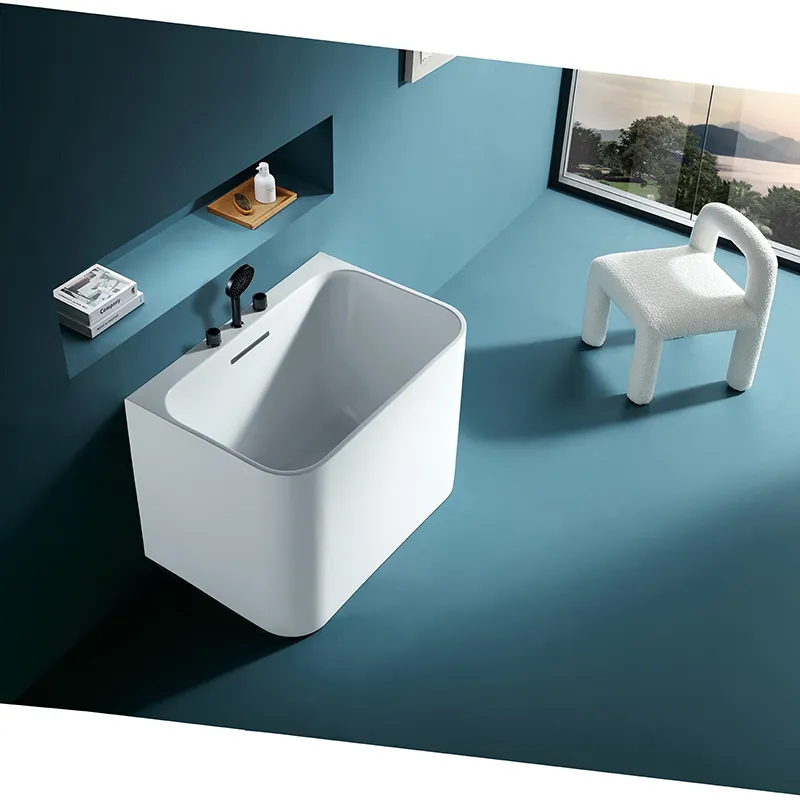
What Is a Standard Bathtub?
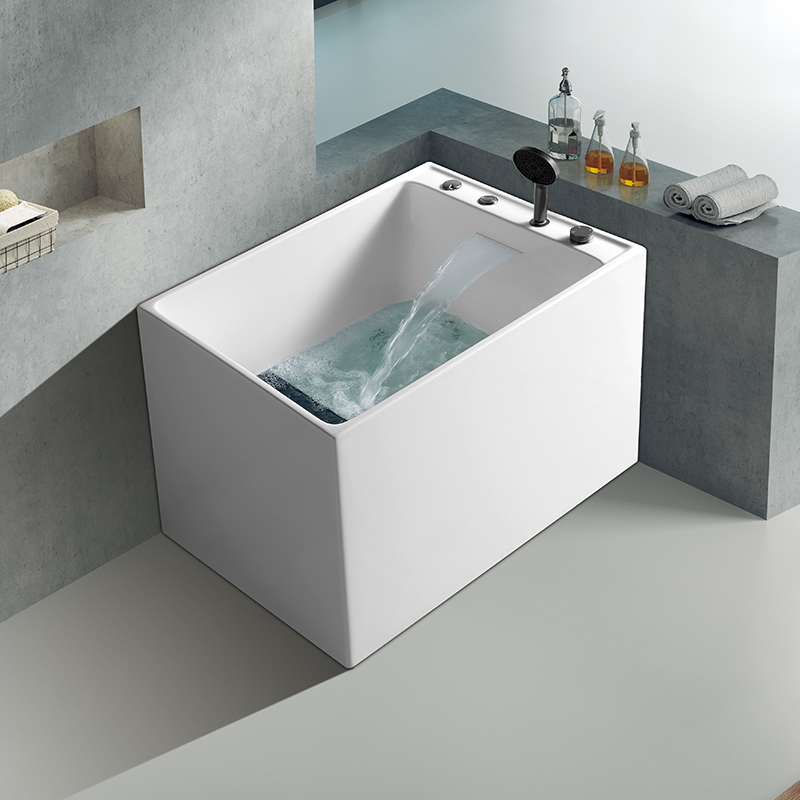
Based on a fundamental definition, a standard bathtub typically refers to an embedded, wall-mounted, or skirted bathtub.
These products are most often installed in bathroom corners, against a wall, or within a pre-allocated alcove. At least one—and sometimes up to three—sides of the tub are fixed directly against a wall; consequently, installation often requires seamless integration with the floor drainage system, wall waterproofing, and surrounding tile work. As such, standard bathtubs tend to prioritize functionality, serving primarily to fulfill daily bathing and washing requirements.
A freestanding soaking tub, conversely, operates on a completely different product philosophy.
What Is a Freestanding Soaking Tub?
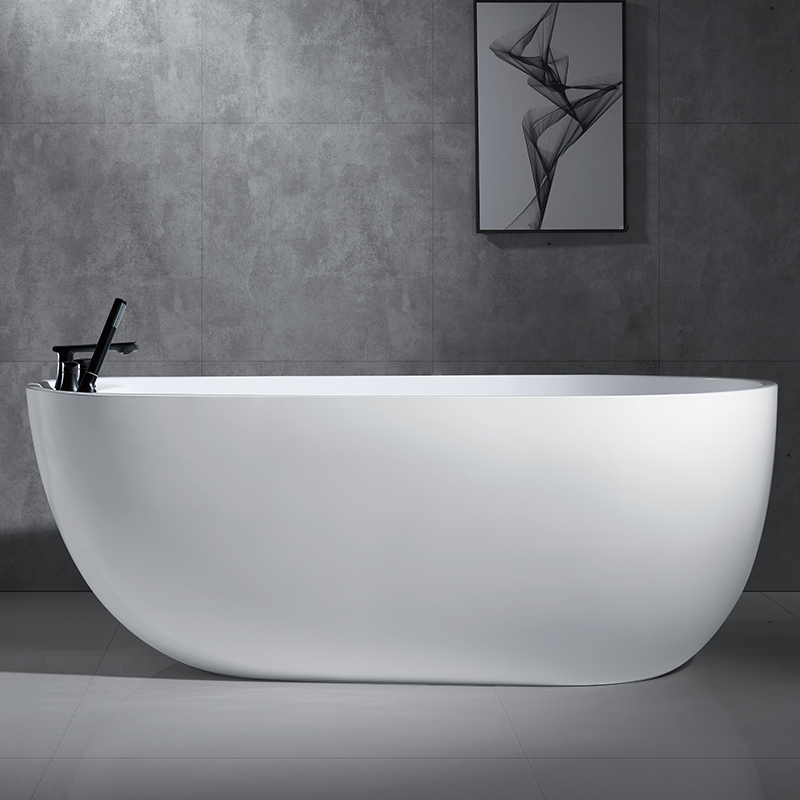
A freestanding soaking tub is a bathtub designed to stand independently, without relying on or attaching to any walls. It features a fully finished, self-contained form that is aesthetically pleasing from all angles; typically, it is positioned in the center of the bathroom, near a window, or within an open-plan bathing area.
Furthermore, the term "soaking" itself encapsulates the product's core positioning—emphasizing a deep, immersive bathing experience for the entire body.
Compared to standard bathtubs, freestanding soaking bathtubs are typically designed with greater depth and feature an interior contour optimized for a relaxed, ergonomic posture, allowing for a more complete submersion of the shoulders, back, waist, and even the legs.
Simply put:
•The core focus of a standard bathtub is "washing."
•The core focus of a freestanding soaking tub is "soaking."
This fundamental difference in positioning dictates all subsequent product characteristics.
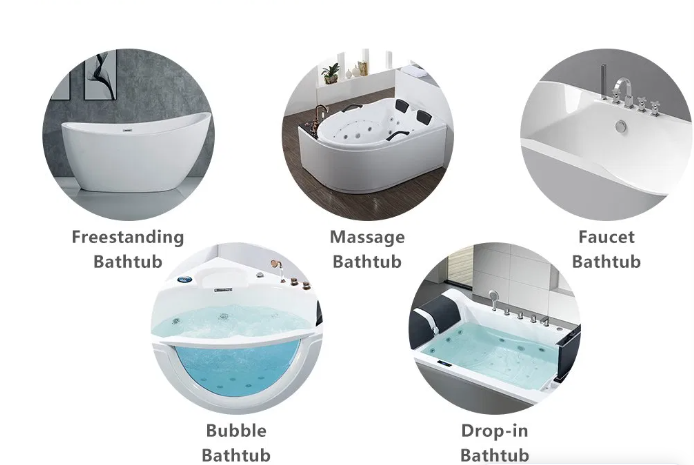
Design Differences: Freestanding Soaking Tubs Emphasize Spatial Aesthetics
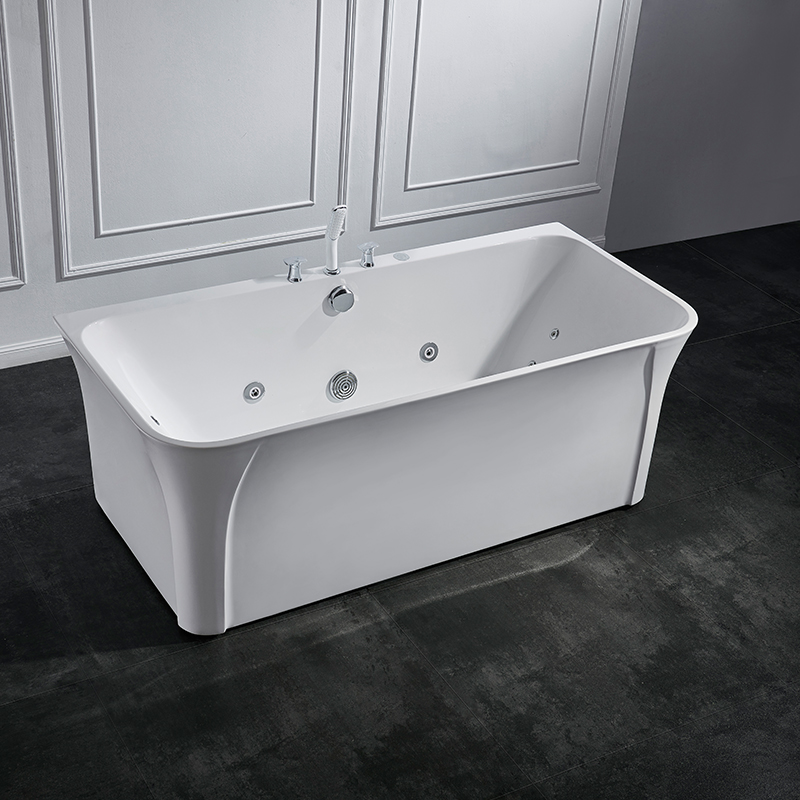
From a visual perspective, standard bathtubs typically feature a predominantly regular rectangular shape.
This is because most standard bathtubs require installation against a wall; consequently, their structure is relatively standardized, their dimensions are uniform, and their stylistic variations are limited.
Common characteristics of standard bathtubs include:
•Square or rectilinear contours
•Relatively wide rims
•Standard skirting panels
•Simple, linear designs
Their primary advantages lie in space-saving efficiency and ease of installation, though they offer relatively limited design expressiveness.
In contrast, freestanding soaking bathtubs possess distinct advantages in terms of visual appearance.
Since they do not need to be embedded into a wall, freestanding soaking tubs enjoy a much freer design vocabulary, featuring shapes such as:
•Oval
•Egg-shell
•Circular
•Boat-shaped
•Minimalist cylindrical forms
In many high-end bathroom settings, the freestanding soaking bathtub itself serves as the visual focal point of the space.
When consumers choose a freestanding soaking bathtub, they are often purchasing not merely a vessel for bathing, but rather a home furnishing piece designed to elevate the overall aesthetic and ambiance of the room.
Therefore, from an interior design perspective:
Standard bathtubs function primarily as complementary fixtures;
whereas freestanding soaking tubs more closely resemble functional pieces of artistic furniture.
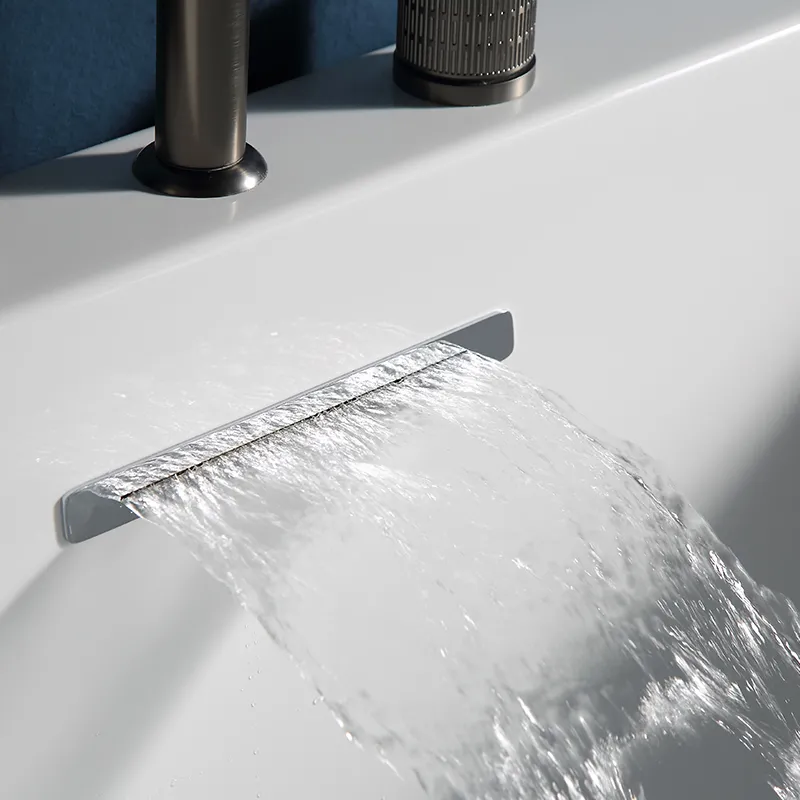
User Experience Differences: Soaking Tubs Prioritize Bathing Comfort
For consumers, the most critical factor remains the actual user experience.
1. Differences in Bathtub Depth
Standard bathtubs typically feature a relatively shallow water level.
This is because standard bathtubs are designed to accommodate showering functions as well; thus, to ensure safety during entry and exit—and to meet the diverse usage needs of a household—the depth of the tub basin is generally limited.
Freestanding soaking bathtubs, however, prioritize an immersive bathing experience.
Most freestanding soaking bathtubs feature a deep-basin design with a greater overall height, allowing for significantly deeper water levels.
Once seated inside, the water level typically reaches:
•The waist
•The chest
•The shoulders
This feature serves as the core embodiment of the "soaking" concept inherent in the name of these freestanding tubs.
2. Differences in Body Envelopment
The interior contours of standard bathtubs tend to be relatively flat and linear.
Consequently, during prolonged soaking sessions, the level of back support provided is generally only average. Freestanding soaking tubs, on the other hand, tend to feature a more ergonomic design:
•A more comfortable backrest angle
•More natural leg-stretching space
•More comprehensive lumbar and back support
Consequently, for those seeking a prolonged soaking experience, freestanding soaking bathtubs are clearly superior to standard bathtubs.
3. Differences in Heat Retention
Many freestanding soaking tubs feature a thick-walled construction.
For example:
•Thickened acrylic layers
•Stone composite materials
•Cast iron structures
These materials help enhance heat retention.
Standard bathtubs, conversely, prioritize cost control; as a result, the heat retention performance of some models is relatively average.
For individuals who enjoy taking long baths, the advantages of a freestanding soaking tub are quite evident.
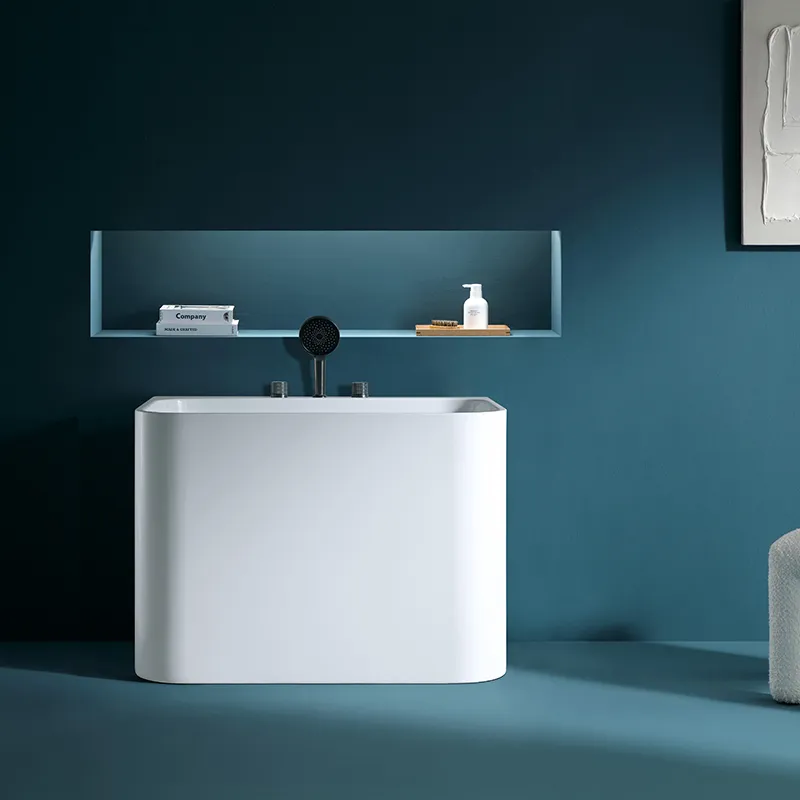
Installation Methods: Freestanding Soaking Tubs Have Higher Construction Requirements
The installation method is often the most overlooked aspect distinguishing the two types of bathtubs.
1. What are the installation characteristics of a standard bathtub?
Standard bathtubs typically rely on the surrounding walls and floor structure for installation.
The process involves:
•Leveling
•Pre-installation of drainage piping
•Wall waterproofing
•Tile finishing/edging
The installation process is well-established, and construction teams are highly experienced.
Overall costs are manageable.
2. What are the installation characteristics of a freestanding soaking tub?
Although a freestanding soaking bathtub may appear simple to position, the actual construction requirements are significantly higher.
The Primary Reasons Are:
1). Precise Drainage Positioning Required
Since freestanding soaking bathtubs are often situated in the center of a room—or in areas away from the walls—the drain outlet typically needs to be pre-embedded into the floor.
Any significant deviation in positioning will directly compromise the installation.
2). Higher Floor Load-Bearing Requirements
When filled with water, the weight of a freestanding soaking bathtub increases substantially.
This is particularly true for stone-based models, which impose specific requirements regarding the floor slab's load-bearing capacity.
3). More Complex Faucet Layouts
Common faucet pairings for freestanding soaking tubs include:
•Floor-mounted faucets
•Wall-mounted faucets
•Deck-mounted faucets
Consequently, the planning of plumbing lines becomes more complex.
Therefore, if consumers intend to install a freestanding soaking bathtub, they should complete the comprehensive planning during the initial stages of their renovation project.
Spatial Requirements: Freestanding Soaking Tubs Are Better Suited for Medium-to-Large Homes
Spatial conditions dictate product selection.
Standard bathtubs have relatively modest spatial requirements. Installation can be completed simply by reserving a designated area along one side of the bathroom.
Therefore, it is well-suited for:
•Small-sized homes
•Standard residential properties
•Secondary bathrooms
Freestanding soaking tubs, however, are a different story.
Since they are designed to showcase their full aesthetic appeal and require clearance space on all sides for accessibility, they demand a significantly larger footprint.
Generally speaking, a freestanding soaking tub is best suited for:
•Spacious master bathrooms
•Bathrooms with clearly defined wet and dry zones
•Open-plan bathroom designs
If the bathroom space is too confined, attempting to force a freestanding soaking bathtub into the layout will actually disrupt the overall flow and circulation of the room.
Consequently, a freestanding soaking bathtub is not a suitable choice for every household.
Spatial compatibility is absolutely critical.
Cleaning and Maintenance Differences: Standard Bathtubs Are Less Labor-Intensive
When it comes to long-term maintenance, standard bathtubs hold a slight advantage.
There are two primary reasons for this:
1. Limited Cleaning Area for Standard Bathtubs
Once a standard bathtub is installed flush against a wall, cleaning is required only for the interior and the visible exterior surfaces.
The total surface area requiring maintenance is relatively small.
2. Freestanding Soaking Tubs Require Comprehensive Cleaning
Since a freestanding soaking tub is exposed on all four sides, the following areas:
•Exterior walls
•Base edges
•Rear surfaces
all require regular cleaning and upkeep.
This is particularly true when the tub is situated in an open area, where dust accumulation tends to be more noticeable.
Nevertheless, many consumers remain willing to accept this trade-off.
For those who prioritize quality of life, the enhanced bathing experience provided by a freestanding soaking bathtub far outweighs the additional effort required for cleaning.
Target Audiences: Freestanding Soaking Tubs Appeal to Those Seeking a Premium Lifestyle
Standard bathtubs are best suited for the following groups:
•Those with limited budgets
•Those with limited bathroom space
•Those who prioritize functionality
•Households with high-frequency usage
Their primary advantages lie in their practicality and reliability.
Freestanding soaking tubs, conversely, are better suited for:
•Those who highly value the bathing experience itself
•Those who prioritize interior design aesthetics
•Those with spacious bathrooms
•Those who seek a sense of ritual and luxury in their daily lives
For many consumers, choosing a freestanding soaking bathtub is, at its core, a lifestyle choice.
It is not merely the act of purchasing a bathroom fixture; rather, it is about creating a dedicated sanctuary for relaxation within one's own home.
