
The Vessel of Time: The Story of Vintage Bathtubs and Bathrooms
Deep in the Lingnan ancient city of Zhaoqing lies an old street that has been forgotten by time. At the street corner, an old Western-style house from the Republic of China era stands quietly. Its red brick walls are covered with moss, as if telling the story of a hundred years of vicissitudes. The owner of this old Western-style house is a young woman named Lin Wanqing. She is an antique restorer and has an almost obsessive love for the old times.
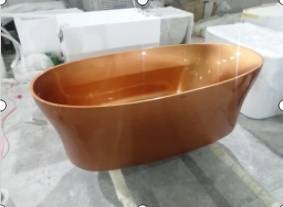
The bathtub is placed in a south-facing bathroom on the second floor. This bathroom was originally empty, with only a tall arched wooden window, outside which stood a century-old banyan tree in the yard. Lin Wanqing invited an experienced master to renovate the bathroom. The walls are tiled with vintage black and white Mosaic tiles, the floor is covered with dark green hexagonal tiles, and a brass chandelier hangs from the ceiling, with soft and warm light.
The moment the vintage bathtub was placed inside, the entire bathroom seemed to come alive instantly. It is no longer a cold vessel but a container holding time, quietly awaiting the arrival of its owner.
From then on, this vintage bathtub became an indispensable part of Lin Wanqing's life. Every nightfall, she would light several scented candles, fill the bathtub with warm water and sprinkle a few rose petals on it. Amidst the misty vapor, she seemed to have traveled through time and space, returning to that elegant and romantic era.
She often soaked in the bathtub for hours on end, listening to the old-fashioned jazz from the gramophone and flipping through those yellowed old books. She imagined that decades ago, there might have been a woman just like her, who had also been in this bathtub, enjoying a moment of tranquility and beauty. It seemed as if she could sense the woman's breathing, her heartbeat, and even the stories she had never spoken.
Sometimes, she would stare blankly at her own reflection in the bathtub, as if she were having a conversation with herself from another time and space. She would ask herself, if she had lived in that era, what kind of life would she have led? What kind of person will she fall in love with? What kind of joys and sorrows will she experience again?
The vintage bathtub is like a container of time, connecting the past with the present. It carries not only water, but also the memories of time, the warmth of life, and people's yearning and pursuit of a better life.
In the fast-paced modern life, we are often troubled by all kinds of trivial matters and forget to stop and enjoy life. And the vintage bathtub is like a gentle reminder, allowing us to slow down, to feel the beauty of life and to listen to the voice of our hearts.
It tells us that life is not merely about the mundane at hand, but also about poetry and distant places. And perhaps poetry and distant places are hidden in a vintage bathtub, in stories that have been forgotten by time.
In the ancient yet vibrant city of Zhaoqing, this vintage bathtub will continue to stand quietly in the bathroom of an old Western-style house, witnessing the passage of time and also Lin Wanqing's life. It will always be a container of time, carrying the past and connecting the future.
When I pushed open the bathroom door covered with copper green, it felt as if I had not entered a space but stepped into an old time soaked in moisture. Here, there are no cold and hard lines of modern bathrooms. Only a vintage bathtub lies quietly under the window, like a silent old man, telling its own story with its mottled glaze and scratches.
This is a cast-iron enamel bathtub, all in a warm ivory white color, with a circle of cobalt blue patterns of varying shades around the edge, embodying the "Victorian style" that was popular in the 1930s. The cylinder body is thick and heavy. When touched, one can feel the solidity of the metal. Although there are a few fine peeling spots on the enamel layer, revealing the dark red cast iron base color beneath, it instead adds a touch of the texture of time. The four claw-shaped feet of the bathtub stand steadily on the black and white diamond-shaped tiles. In the gaps of the tiles, there are light gray water stains accumulated over the years. They are not dirt but rather like dark patterns sewn by time, creating some kind of hidden connection between the floor and the bathtub.
The window is arched and filled with frosted glass. When sunlight passes through, it is crumpled into soft spots and falls on the water surface of the bathtub. In the early morning, when warm water is poured into the VAT, fine ripples will appear on the water surface, and the light spots will sway along, as if a handful of broken gold has been scattered. The copper faucet beside the bathtub is single-handled. When it is turned, it makes a soft "click, click" sound. The water flows out, carrying a slight metallic tremor, which is completely different from the honking of cars coming from the distant street - that sound is old, with a touch of slow and leisurely ease, as if reminding people: there is no need to rush at this moment.
The charm of a vintage bathroom is never limited to the bathtub itself. The brass towel rack hanging on the wall was bought by the owner from the flea market. The surface coating has long faded, but it still exudes a warm texture. When a linen towel is hung on it, the wrinkles are all smeared with the softness of the old times. In the corner stood an oak shelf with a glass bottle of bath oil on it. The bottle was matte and the label was handwritten, with the words "Lavender and Sweet Orange" somewhat blurred. On the second layer of the shelf, there was an old hardcover book. The edges of the pages were yellowish, with a few withered rose petals in between - those were casually put in by the owner when taking a bath last summer. Now the petals have lost their fragrance, but they have become specimens of time.
